World Bee Day - 20th May
What my bees know about management (lessons from three years in beekeeping).
- What do you do for a living?
- I manage a production plant with twenty thousand workers. I’m a beekeeper.

A few years into beekeeping as a hobby, I can confidently say it has taught me a few business lessons - on top of providing Yorkshire honey (and occasionally, plump straight-out-of-the-cosmetologist-like lips). A good hobby takes your mind off the daily issues, and for me, keeping bees absolutely delivers. There is nothing quite like being attacked by a hundred bees during a quennless hive inspection - your survival instinct kicks in and completely burns out the memory of that stressful Tuesday meeting.
Leadership is everything.
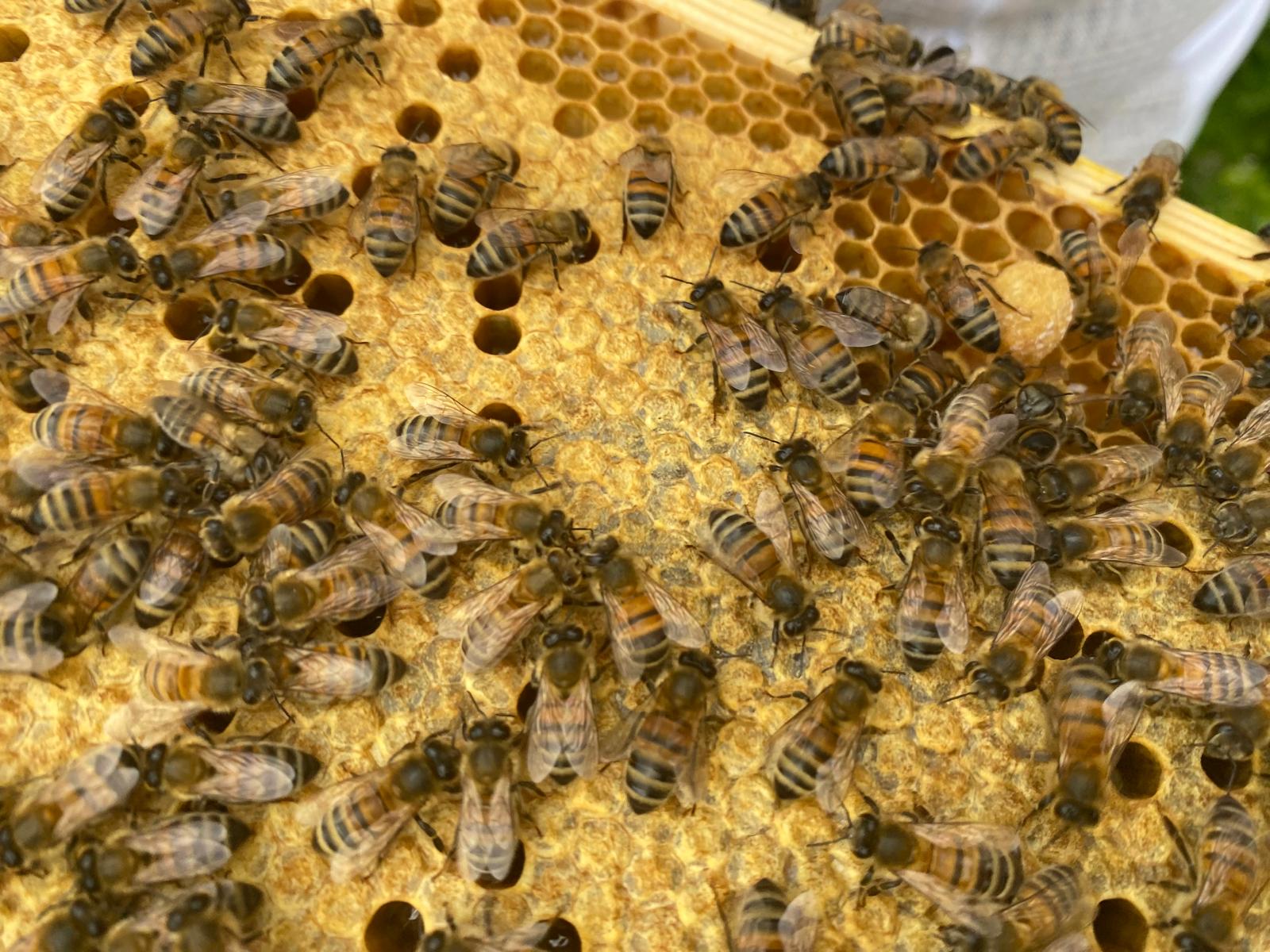
Bees are, under normal circumstances, remarkably disciplined and industrious creatures – governed by the Queen in every aspect of their duties. The moment the hive became queenless, it descends into anarchy and chaos,
bees become aggressive and busy with anything but their actual work, and
unsurprisingly, the hive life collapses.
Yet the moment new management is in place — whether through homegrown talent (as the colony raises its own young queen) or an outside “hire” of a pedigree queen bought - the rioting stops. Everyone returns to their post, diligently fulfilling their duties with no strategy debates, no change- management workshops, and no passive-aggressive reply-alls
By the way, do you know what separates the queen from the rest of the workforce? Not genetics — they are biologically identical. Purely diet. The queen receives royal jelly from the age of a two-day-old egg; the workers eat whatever they can forage. (Does anyone know a good nutritionist? I’m not a two-day-old egg, of course, but worth trying…).
Operational efficiency: 400% profitability.
The hive is an extraordinarily efficient operation. Over summer, a healthy colony can produce over five times the honey it actually needs to survive — a 400% surplus that any CFO would be proud to present at the AGM. And they have been running this model for around 120 million years - if your
business strategy has that kind of track record, you probably do not need a consultant.
Supply chain, logistics & middle management.
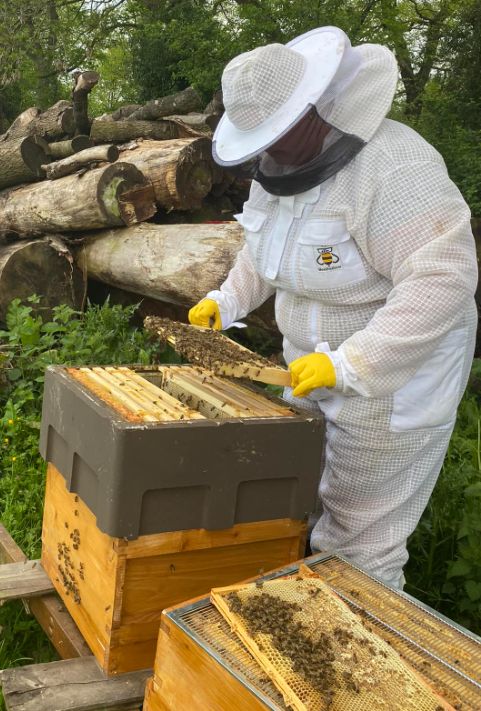
Outsourced (to me), for processes optimisation and production speed up. I ensure there are sufficient empty frames and foundation – it takes up to two weeks to build a fresh honeycomb of 11 waxed frames, yet only two days to clean up and restore those after honey extraction. Recycling, it turns out, is a superb time and effort saver in the bee world too!
I monitor living space as the colony expands, adding a floor or two when needed; ensure its enough available storage for honey, removing full honeycombs; offer sugar candy through rapid family growth to ease the expanding workforce crisis… Middle management, in other words - but with significantly more stings and beautiful scenery. It is genuinely fascinating to observe the operational detail: foragers returning with pollen, water carried in a sugar-film coating to prevent spillage in transit,
dedicated ventilation teams evaporating excess moisture from the honey, and quality-control inspectors stationed at the entrance checking every delivery.
If your logistics team operates at this level, hold on to them. Interesting, that the guards will still let in a stranger bee loaded with pollen – the delivery will be taken off the lost bee by the pollen receivers, and the visitor can fly away freely. The empty-handed bee from competitor’s hive won't get past the entrance. Zero tolerance for freeloaders.
The redundancy policy is… brutal.
Drones (the non-working male bees) have an amusing work-life balance. They do have a very lavish lifestyle, being fed, cleaned and overall waited on.
However, it comes with the price – if they are spared their direct duty of fertilising the queen (through which they die due to their body torn apart), they will be kicked out of the hive the moment they are no longer of use to the queen, often towards an autumn. It is rather sad to watch how they are physically escorted off the premises: dragged, pushed, and thrown into the cold and rain. No leaving drinks. No phased retirement. The hive has no sentimentality about it whatsoever: you forage, you produce, you contribute — or you are out before the first frost. I guess 400% profitability leaves no room for HR progressive policy.
The Bigger Picture.
What strikes me most is not the efficiency, nor the ruthlessness, but the purpose. By simply operating their little business, bees support the ecosystem that feeds the planet. Not many companies can say their core activity is genuinely essential to life on Earth. It is an ambitious mission statement to aspire to.
For me, there is also something quietly satisfying about doing something whose value extends beyond the balance sheet — which is fortunate, because the investment required was enthusiastically underestimated. So if you have ever bought a jar of Yorkshire honey from me: thank you.
You are, technically, an investor, supporting life on our planet!